Understanding the Private OTC Market: A Comprehensive Guide for BTCMixer Users
Understanding the Private OTC Market: A Comprehensive Guide for BTCMixer Users
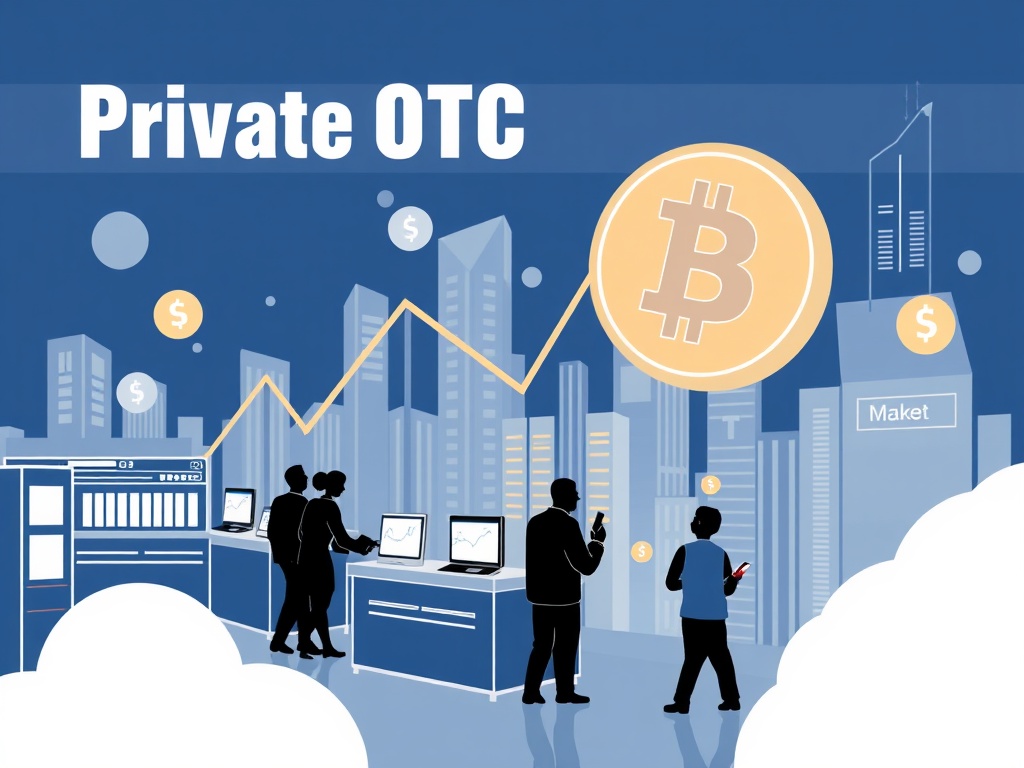
The private OTC market has become a critical component of modern financial ecosystems, particularly in the cryptocurrency space. For users of platforms like BTCMixer, grasping the nuances of this market is essential to navigating digital asset transactions with confidence. Unlike traditional exchanges, the private OTC market operates outside of public listings, offering a more discreet and flexible environment for trading. This article explores the structure, benefits, and risks associated with the private OTC market, with a focus on how BTCMixer users can leverage its advantages while mitigating potential challenges.
What Is the Private OTC Market?
Definition and Key Characteristics
The private OTC market refers to a trading environment where large-volume transactions occur directly between parties, bypassing centralized exchanges. These trades are typically executed off-exchange, meaning they are not listed on public platforms like Binance or Coinbase. Instead, they are facilitated through private agreements, often involving institutional investors, high-net-worth individuals, or specialized brokers. The key characteristics of the private OTC market include:- High liquidity: Large trades can be executed without significantly impacting market prices.
- Customization: Terms of the trade, such as price and timing, can be negotiated between parties.
- Privacy: Transactions are not publicly disclosed, offering a level of anonymity not found in public markets.
How It Differs from Public Exchanges
Public exchanges operate on a transparent, order-book-based system where prices are determined by supply and demand. In contrast, the private OTC market relies on direct negotiations between buyers and sellers. This distinction is crucial for BTCMixer users, as it allows for tailored solutions that may not be available on public platforms. For instance, a user might negotiate a specific price for a large BTC purchase through BTCMixer’s private OTC channels, avoiding the price slippage often seen on public exchanges.How BTCMixer Facilitates Private OTC Trading
BTCMixer’s Platform Features
BTCMixer has positioned itself as a key player in the private OTC market by offering a platform designed for secure, peer-to-peer transactions. Its features include:- Direct trading: Users can engage in OTC trades without intermediaries, reducing costs and increasing control.
- Advanced security: The platform employs encryption and multi-factor authentication to protect user data and funds.
- Customizable terms: BTCMixer allows users to set specific parameters for their trades, such as price, volume, and settlement time.
Why BTCMixer Is a Preferred Choice
For users seeking the benefits of the private OTC market, BTCMixer stands out due to its user-centric approach. Unlike traditional exchanges, BTCMixer does not require users to disclose their trading activities publicly. This aligns with the privacy-focused nature of the private OTC market. Additionally, BTCMixer’s reputation for reliability and its integration with various cryptocurrencies make it an attractive option for both retail and institutional traders.Advantages of the Private OTC Market
Enhanced Privacy and Anonymity
One of the most significant benefits of the private OTC market is the ability to conduct transactions without public scrutiny. For BTCMixer users, this means they can trade large volumes of cryptocurrency without their activities being visible on public ledgers. This level of anonymity is particularly appealing to individuals or entities that prioritize confidentiality, such as institutional investors or high-profile individuals.Flexibility and Customization
The private OTC market offers unparalleled flexibility in trade execution. Users can negotiate terms that suit their specific needs, whether it’s a unique price point, a staggered settlement schedule, or a specific cryptocurrency pair. BTCMixer enhances this flexibility by allowing users to create custom trade agreements, ensuring that their transactions align with their financial goals.Cost Efficiency
Compared to public exchanges, the private OTC market often involves lower transaction fees. This is because there are no intermediaries or listing fees associated with private trades. For BTCMixer users, this can result in significant cost savings, especially for large-volume trades. Additionally, the absence of market impact from large orders can lead to more favorable pricing.Risks and Challenges in the Private OTC Market
Lack of Regulatory Oversight
A major drawback of the private OTC market is the absence of centralized regulation. Unlike public exchanges, which are subject to strict compliance requirements, private OTC transactions operate in a more decentralized environment. This lack of oversight can expose users to potential risks, such as fraud or non-compliance with financial laws. BTCMixer users must remain vigilant and conduct thorough due diligence before engaging in private OTC trades.Counterparty Risk
In the private OTC market, the success of a transaction depends heavily on the reliability of the counterparty. If one party fails to fulfill their obligations, the other party may suffer financial losses. BTCMixer mitigates this risk by implementing verification processes for its users, but it is still essential for traders to assess the credibility of their counterparts.Limited Transparency
While privacy is a key advantage, the private OTC market can also lack transparency. Without public records of trades, it can be challenging to verify the legitimacy of a transaction. BTCMixer addresses this by maintaining detailed transaction logs and offering dispute resolution mechanisms, but users should still exercise caution when entering private OTC agreements.How to Navigate the Private OTC Market with BTCMixer
Steps to Initiate a Trade
For BTCMixer users looking to engage in the private OTC market, the process involves several key steps:- Identify a counterparty: Locate a trusted buyer or seller through BTCMixer’s network or external channels.
- Negotiate terms: Discuss and agree on the price, volume, and settlement details of the trade.
- Execute the trade: Use BTCMixer’s platform to finalize the transaction, ensuring all terms are documented.
- Verify completion: Confirm that the funds or assets have been transferred as agreed.
Best Practices for Security
To protect themselves in the private OTC market, BTCMixer users should follow these best practices:- Use secure communication: Avoid sharing sensitive information through unsecured channels.
- Verify identities: Confirm the identity and reputation of the counterparty before proceeding.
- Document everything: Keep detailed records of the trade agreement to resolve any disputes.
- Leverage BTCMixer’s tools: Utilize the platform’s security features, such as encryption and multi-factor authentication.
The private OTC market offers a unique set of opportunities and challenges for BTCMixer users. By understanding its structure and leveraging the platform’s features, traders can harness its benefits while minimizing risks. As the cryptocurrency landscape continues to evolve, the private OTC market will likely play an even more significant role, making it imperative for users to stay informed and proactive in their trading strategies.
In conclusion, the private OTC market is not just a niche segment but a vital part of the broader financial ecosystem. For BTCMixer users, it represents a pathway to greater control, privacy, and efficiency in their cryptocurrency transactions. However, success in this market requires a balanced approach that combines the advantages of the private OTC market with the security measures provided by platforms like BTCMixer.

The Private OTC Market: A Strategic Frontier for Blockchain-Driven Financial Innovation
As Blockchain Research Director, my perspective on the private OTC market is shaped by its unique intersection of privacy, liquidity, and decentralized infrastructure. Unlike public OTC markets, which operate under centralized oversight and regulatory scrutiny, the private OTC market leverages blockchain technology to enable off-exchange trading of assets—often tokens or digital securities—between institutional or high-net-worth participants in a confidential setting. This model is particularly compelling for entities seeking to mitigate counterparty risk, reduce transaction costs, and maintain discretion around their trading activities. From a technical standpoint, the private OTC market thrives on smart contract automation, which ensures transparency in execution while preserving privacy through permissioned networks or zero-knowledge proofs. My research has shown that this balance is critical; without robust cryptographic safeguards, the very privacy that defines the market could undermine trust. Practically, this means institutions must prioritize auditable smart contract frameworks and rigorous tokenomics design to prevent exploits or liquidity fragmentation. The private OTC market isn’t just a niche—it’s a scalable solution for modernizing traditional OTC processes, especially in asset classes where confidentiality is paramount.
What sets the private OTC market apart is its adaptability to cross-chain interoperability—a challenge I’ve dedicated years to addressing. In my experience, many private OTC platforms struggle with siloed liquidity pools or incompatible token standards, which can hinder seamless asset transfers across blockchains. For instance, a trader might hold a token on Ethereum but need to execute a swap on a Solana-based private OTC venue. My work has focused on developing cross-chain atomic swaps and standardized tokenization protocols that bridge these gaps without compromising security. Practically, this requires collaboration between protocol developers, regulators, and market participants to establish common frameworks. Another practical insight is the role of tokenomics in sustaining liquidity within private OTC ecosystems. Unlike public markets, where price discovery is organic, private OTC markets often rely on pre-negotiated terms or liquidity incentives. This means token design must account for asymmetric information risks—ensuring that neither party can exploit hidden reserves or manipulate prices through off-chain activities. From a security angle, I’ve observed that private OTC platforms are increasingly targeted by sophisticated attacks due to the high-value assets involved. My research emphasizes the need for multi-layered security audits, including formal verification of smart contracts and decentralized identity solutions to authenticate participants.
Looking ahead, the private OTC market will likely become a cornerstone of institutional blockchain adoption, but its success hinges on addressing regulatory ambiguity. While privacy is a key selling point, regulators are still grappling with how to classify and oversee these markets. My perspective is that proactive compliance frameworks—such as programmable KYC/AML tools embedded in smart contracts—can align privacy with regulatory requirements. For example, a private OTC platform could use zero-knowledge proofs to verify participant identities without exposing sensitive data. This approach not only satisfies compliance but also enhances user trust. Practically, institutions must also consider the environmental impact of their private OTC operations, especially if they rely on energy-intensive consensus mechanisms. My team is exploring hybrid models that combine proof-of-stake with privacy-preserving techniques to reduce carbon footprints. Ultimately, the private OTC market represents a paradigm shift in how assets are traded, but its full potential will only be realized through interdisciplinary innovation. As someone who has navigated both the technical and regulatory landscapes of blockchain, I believe this market is not just a technical challenge but a strategic opportunity to redefine financial infrastructure in the digital age."